

Author: Jano Markhulia
February 16, 2026
(Part III)
Abstract
The article constitutes the third part of the study entitled “From Sumerian Cuneiform to the Grakliani Inscriptions: The Caucasus as a Crossroads of the Earliest Writing Culture.” The first part examines the formation and evolution of the earliest writing systems in the Near East and adjacent regions, while the second part focuses on the role of the Caucasus, particularly Georgia, in the genesis of modern humans and in early civilizational processes from the Lower Paleolithic to the Late Chalcolithic.
The third part is devoted to the archaeological and semiotic analysis of early writing systems in Georgia and proto-writing practices within the Caucasus region. The article discusses the sign traditions attested in the cultural milieu of Colchis, the inscriptions of Grakliani Hill, and the plaque discovered near Lake Bashplemi, taking into account their structural features and functional context. The material presented does not aim to prove the existence of a fully developed alphabetic writing system; rather, it seeks to identify the cultural and intellectual environment in which the structured use of symbolic signs became possible.
A critical analysis of archaeological data suggests that the Caucasus should not be regarded merely as a peripheral zone for the diffusion of writing cultures. On the contrary, the region emerges as an active space where local traditions, regional contacts, and technological innovations interacted. Such an approach considers the historical formation of the Georgian script in the Late Antique period not as a sudden phenomenon, but as the outcome of a long-term and multi-layered cultural process.
Keywords: Early writing systems in Georgia, Proto-writing, Grakliani inscriptions, Colchian culture, Semiotic analysis, Archaeological heritage of Caucasus.
1.1. Ancient Writing Systems and Their Influence on Caucasian Culture
Writing cannot be regarded as a one-time “invention” or as the instantaneous creation of a predetermined, fully developed system. Rather, sign systems that emerged in different historical and social contexts represent unique manifestations of human thought, responding to the needs and capabilities of particular societies at specific stages of their development. From this perspective, classifying writing systems as either “fully developed” or “incomplete” is not only inaccurate but also methodologically problematic, since each of them constituted a fully functional intellectual model within the framework of its own time and environment.
The formation of writing and sign-based practices is closely associated with increasing social complexity, the intensification of economic relations, and the need to store and transmit information. This process does not develop linearly and does not conform to a single evolutionary scheme; rather, it is multicentric and often unfolds in parallel across different regions.
The Caucasus is of particular interest in this context. Geographically, it constitutes a connecting space between the Black Sea, the Western Asia, and Inner Eurasia, where migratory, economic, and cultural flows have intersected since ancient times [1; 2]. It is precisely in such liminal regions that fertile conditions emerge not only for technological innovation, but also for symbolic and semiotic innovation.
For a long time, the place of the Caucasus, and particularly Georgia, in the global narrative of the history of writing culture was regarded as peripheral. The scarcity of written monuments and the relatively late attestation of a fully developed alphabetic system contributed to the perception that writing practices in the region were solely the result of influences originating from outside. However, archaeological discoveries and textual analyses conducted over recent decades have significantly altered this picture.
Artifacts such as the enigmatic inscriptions from the Grakliani Hill, the tablet discovered near Lake Bashflem, the linear inscriptions from Jumiti and Dablagomi, as well as accounts from antiquity concerning a Colchian writing tradition, place the issue in an entirely new perspective. These data suggest that the Caucasus was not merely a passive recipient of cultural influences, but may have represented one of the independent, autochthonous centers of writing culture, where local traditions developed in synthesis with the influence of ancient writing systems.
1.2 Urbanization and Socioeconomic Structure — A Prerequisite for Writing
The cultural spaces that developed in the territory of Georgia during the Bronze and Early Iron Ages — both in the west (Colchis) and in the east (the Kura–Araxes and Trialeti cultural complexes) — demonstrate a level of social complexity that would naturally have generated a need for the organized recording of information [3, 4]. Cultural development in these regions was not episodic; rather, it was based on long-term, continuous, and largely autochthonous traditions, which constitute an essential prerequisite for the stability of intellectual practices [5–7]. Against this broader Caucasian background, Colchis stands out for its distinctive archaeological characteristics.
In western Georgia, the Colchian cultural sphere represents a distinctive and structurally stable system. From a historical-archaeological perspective, it is notable for its material isolation and its high degree of immanent development. Research indicates that the cultural tradition established here developed independently, within the framework of its own internal logic and chronological continuity [5–7].
This “isolation” should not be understood as cultural detachment in the sense of complete closure. On the contrary, Colchis constituted a space that was geographically connected to the Black Sea basin and regional communication networks, while at the same time maintaining a distinctly individual material culture and technological traditions. It is precisely this combination — the potential for external contacts and the independence of internal development — that creates an environment in which intellectual and semiotic innovations may emerge autochthonously.
The chronological continuity of Colchian culture, extending from the Neolithic to the Early Iron Age, points to stable social structures. Within this system, urban-type settlements, specialized workshops, and complex networks of economic relations developed [5–8]. Such a social organization rarely functions solely on the basis of mnemonic (oral) resources and, as a rule, requires the formalized transmission of information.
Assyrian and Urartian written sources portray the Colchian (Kulha/Kilhi) area as a politically organized entity involved in the regional balance of power [8–11]. Such political structures are difficult to conceive of without at least minimal administrative mechanisms. Administration, in turn, requires record-keeping, the documentation of agreements, and the structuring of information — whether in written, sign-based, or conventional symbolic forms.
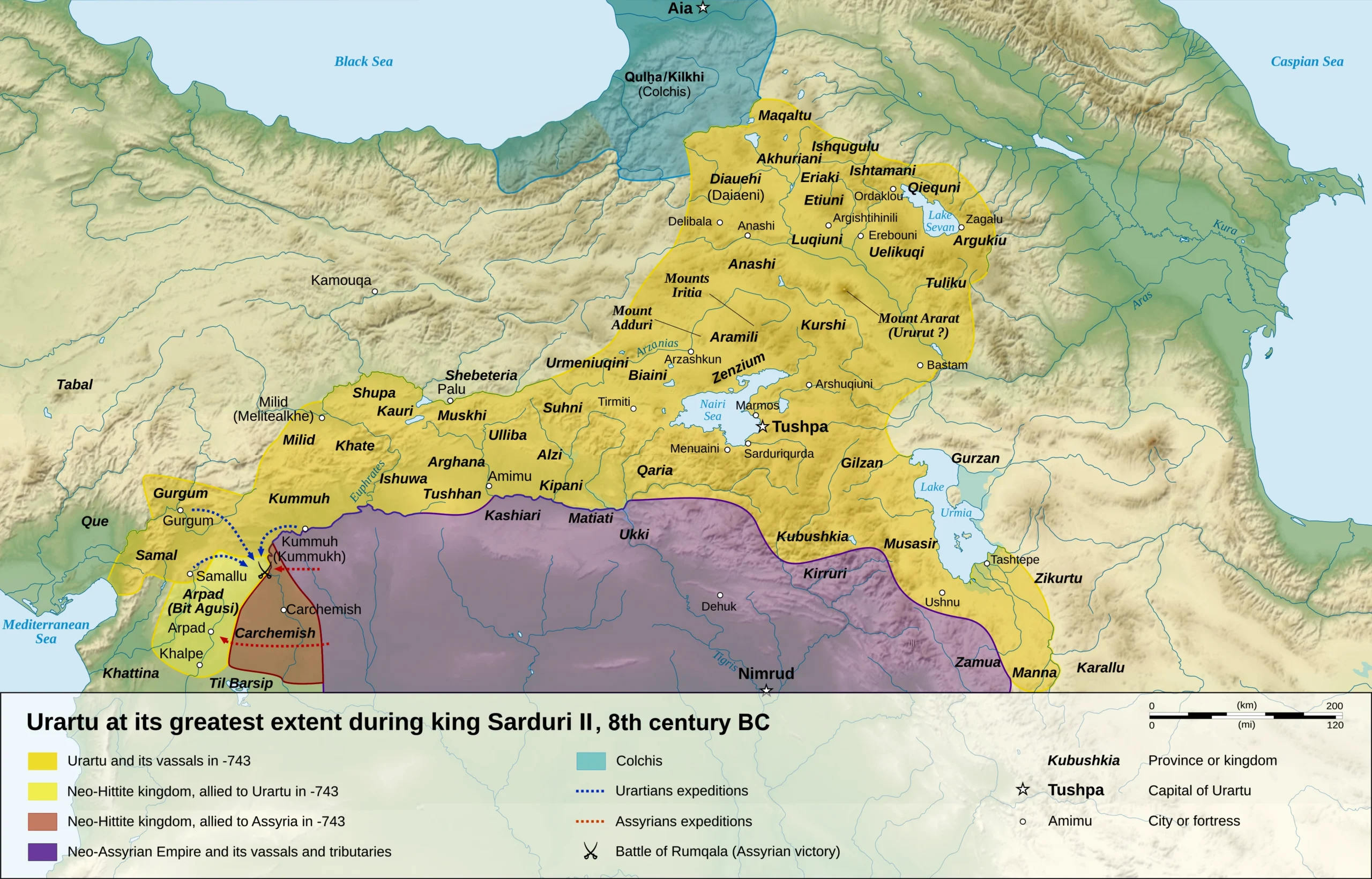

Urbanization is of particular importance in this context. In Colchis, coastal and inland settlements formed an integrated network in which the Phasis River and the commercial space that developed around it represented not merely a geographical feature, but a functional system [12–14]. Trade operations, resource distribution, and interaction within a multiethnic environment created what may be termed a “social demand” for the precise management of information.
Finally, the high level of metallurgical and pharmacological knowledge in Colchis — whether in the form of sophisticated gold-extraction technologies or the systematic use of medicinal and poisonous plants, symbolically reflected in the myth of Medea — points to deep technological and intellectual traditions [14–20]. The accumulation, intergenerational transmission, and standardization of specialized scientific or workshop knowledge encounter serious limitations when relying exclusively on oral transmission. Accordingly, it cannot be ruled out that Colchian communities possessed, or were in the process of developing, some form of system of written signs — whether through the local adaptation of Near Eastern models or through an entirely independent symbolic practice.
Such systems were presumably used to structure and transmit practical knowledge, including medicinal recipes (pharmacological knowledge), ritual practices, and trade-administrative needs. The concentration of pharmacological, technological, and ritual knowledge of this kind, in itself, required organized forms of information and symbolic thinking, thereby creating conditions conducive to the development of writing-like systems.
Thus, the urban and socioeconomic structures existing in Colchis provided the necessary background in which the existence of proto-writing practices can be regarded not as a speculative proposition, but as a functionally grounded hypothesis. It is precisely against this background that we should analyze the ancient sources containing indirect, yet noteworthy, indications of writing traditions in the Colchian sphere.
1.3. Testimonies from Ancient Sources: The Mysterious Traces of Colchian Writing
The high level of technological development, the persistence of medico-pharmacological traditions, and the abundance of ritual practices identified in the Colchian sphere created a cultural environment in which the use of symbolic signs and the structured transmission of information were practically indispensable. It is within this context that the following question arises: do ancient sources contain indications of the existence of an indigenous writing system in Colchis, or of proto-writing practices that would logically correspond to its relatively high level of civilization and administration?
Although direct archaeological evidence for Colchian writing remains scarce at this stage, a number of intriguing fragments can be found in Greek and Roman texts. When critically analyzed, these may constitute indirect evidence for the existence of sign systems.
1.3.1. Specific References in Ancient Authors
Diodorus Siculus (1st century BCE), in his extensive work Bibliotheca Historica (Library of History), describes the Colchians as a highly developed people, although his references to writing are fragmentary [21].
Charax of Pergamum (2nd century CE), in his writings, mentions “chrysography” — “writing” performed on gold — which, according to his account, was used in Colchis in connection with the creation of the Golden Fleece [21, 22]. It is unclear whether the author was referring to actual written signs or to a metaphorical description; nevertheless, the term is noteworthy from the perspective of notational practices.
Apollonius Rhodius (3rd century BCE), in the Argonautica, mentions the “kyrbeis” (κύρβεις) found in Colchis (/kýr.beːs/ → /ˈcyr.βis/ → /ˈcir.vis/) — special boards or records that may have been associated with maps or topographical information used for navigation [23, 24]. This may indicate that the Colchians possessed not only knowledge of maritime trade routes but also practices for documenting them.
In the work On the Gods (Περὶ θεῶν) (XX, 24), Apollodorus of Athens (2nd century BCE) describes stone pillars and stelae on which laws were inscribed. He states: “…the stone pillars contained written laws. These upright stones were called stelae; those extending upward were called kyrbes, while those crowned like a tiara (Tiara) were called kyrbasia” [24, p. 157; 25]. Commentators (scholiasts) of the Hellenistic period also indirectly suggest that written documents existed in Colchis [21, 24, pp. 151–168, 26].
1.3.2. The “Kyrbeis” and the Corybantes — Traces of a Scribal Tradition
Greek and Roman sources contain accounts associating the production of the “kyrbeis” with the Corybantes, a group of Colchian priests and ritual practitioners [21, 24, pp. 151–168]. Several well-known Greek thinkers — Theopompus [24, p. 156], Theophrastus, Cratinus, Aristotle, Plutarch, Lysias, Porphyry, and others — as well as the Suda lexicon, attribute the creation of the kyrbeis (kyrbes) to the Corybantes [21, 24, pp. 87, 156, 27].
According to Clement of Alexandria (2nd century CE), the Corybantes are credited not only with a writing tradition but also with the discovery of musical rhythm: “…the Corybantes — Karibes were the first wise priests, who discovered the rhythm of music and created the Ephesian script endowed with magical power” [21, 24, p. 164, 28]. This information may be understood allegorically; however, at the very least, it points to a cultural layer in which written and rhythmic sign systems were interconnected.
According to ancient sources, the “kyrbeis” included both legislative texts and religious rituals and mythological narratives [23, 24, pp. 228–229]. Of particular interest is a later archaeological artifact: a stone slab discovered in the village of Otobaia in the Gali district (Fig. 3), which some researchers believe may represent an image of a “kyrbeis”-type object.

Figure 2. An image carved on a stone discovered in the village of Otobaia, Gali district, in the 1970s, believed to represent a kyrbeis (preserved at the Gali Museum of Local Lore). Source
Despite the abundance of mythological and literary layers, ancient written sources nevertheless provide indications of objects and practices that may have had notational, mnemonic, or proto-writing significance. These accounts cannot substitute for archaeological evidence, but they create an intellectual and cultural context that cannot be entirely disregarded.
Thus, ancient texts should be viewed not as direct confirmation of the existence of Colchian writing, but as circumstantial evidence suggesting that the Colchian sphere possessed a centuries-long tradition of symbolically organized information transmission.
For a final assessment, these textual data must be compared with the archaeological record — an issue discussed in the following subsection (1.4).
1.4. The Challenges of Researching Colchian Writing: Scarcity of Artifacts and Future Perspectives
Although ancient Greek and Roman written sources provide certain indications of the existence of sign-based or writing practices in Colchis, the issue has yet to be systematically analyzed in either Georgian or international historiography. At the same time, direct material evidence confirming the existence of Colchian writing is extremely scarce, which represents one of the principal challenges of research.
This deficit may be attributed to several fundamental factors.
1.4.1. The Use of Perishable Materials for Writing
It is highly probable that in Colchis, as in other neighboring regions, organic biodegradable materials — leather, parchment, wooden tablets, wax tablets, and others — were widely used as media for written information. Indirect evidence of this can be found in Herodotus’ Histories: “…the Greeks have from ancient times called books ‘skins,’ because at one time, owing to a shortage of papyrus, they used the skins of goats and sheep for writing. Even in my time, many barbarians write on such skins” [29, p. 333; 30].
This account makes clear that written culture in the ancient world was not necessarily associated with stone, clay, or metal media. Accordingly, any possible texts produced on organic materials in Colchis, or documents of the “kyrbeis” type, would have been particularly vulnerable to destruction, especially given the region’s natural and geographical conditions.
1.4.2. Geomorphological and Climatic Factors
The climatic and geomorphological characteristics of western Georgia are generally unfavorable for the long-term preservation of organic materials [31]. The high humidity of the Colchian Lowland, together with its peat-rich and acidic soils, significantly accelerates the decomposition of wood and leather, except in the rare cases when artifacts are preserved within deep, anaerobic (oxygen-deprived) peat layers, which, conversely, can contribute to their exceptional preservation.
A similar pattern can be observed in other regions. For example, Greek poleis associated with the Scythians, such as Olbia and Panticapaeum, have yielded Greek-language inscriptions indicating the existence of written communication, yet no direct examples of Scythian writing have survived. This parallel once again demonstrates that the existence of writing practices does not necessarily result in their archaeological preservation [29, pp. 250–310; 32].


1.4.3. Cultural and Historical Transformations
Following the spread of Christianity, it is possible that texts and ritual documents from the pre-Christian period were deliberately destroyed. Similar processes are well documented in both the Roman and Byzantine worlds, where artifacts associated with pagan culture were frequently treated within the context of religious reforms.
1.4.4. Difficulties in Locating and Investigating Urban Centers
The precise localization and large-scale archaeological investigation of the most important centers of the Kingdom of Colchis — Phasis (modern Poti) and Dioscurias (modern Sukhumi) — remain challenging to this day. This research deficit significantly limits the possibility of identifying material traces of written culture.
The following locations are considered particularly promising:
- the Dikha–Gudzuba archaeological complex;
- the areas surrounding Lake Paliastomi;
- abandoned urban centers of the Colchian Lowland, including Phasis, Vani, and others [35].
Thus, the most realistic possibility of discovering possible examples of Colchian writing is associated with naturally protected archaeological locations — swampy, peat-rich, and low-oxygen environments, where organic materials are more likely to survive. The discovery of textual artifacts under similar conditions has been documented in other parts of Europe, including lakeside settlements in the Alpine region (the so-called Mondsee-type sites), where peat-rich environments preserved wooden structures and even linear signs [36, 37]. Comparable cases are also known from archaeological studies of monastic archives and lakeside settlements in Poland and Switzerland.
1.5. The Genesis of Georgian Writing: Historical Context and Archaeological Discoveries and the Problem of Traditional Dating
In historical scholarship, the creation of the Georgian alphabet has traditionally been dated to the 4th–5th centuries CE. This view is based primarily on the Asomtavruli inscriptions of Bolnisi Sioni [38, 7–15] and the Davati stele, which are among the earliest dated monuments bearing Georgian inscriptions. Nevertheless, a fundamental question has long persisted in academic circles: might the roots of Georgian writing extend considerably further back in time?
As early as the twentieth century, Ivane Javakhishvili, in his seminal work Georgian Paleography, observed:
“The initial period of the Georgian alphabet should be assumed to date at least seven or eight centuries earlier” [39, p. 235].
At the same time, the scholar emphasized that, until relevant examples were discovered, this proposition had to remain a hypothesis:
“…scientific caution is nevertheless preferable, and until monuments of Georgian writing predating the sixth century are discovered, I regard my statement concerning the time of the origin of the Georgian alphabet as a hypothesis, whose validity will be determined by the future” [39, p. 235].
Javakhishvili also stated emphatically that “the idea that the Georgian alphabet was invented in the fifth century must now be definitively rejected, and the view that Georgian writing is considerably older must be established; its beginnings should be sought in the distant past and in Asia Minor, rather than in Greece” [38, p. 196].
A similar position was held by Pavle Ingorokva, who proposed that the Georgian alphabet may have originated in the 8th–7th centuries BCE, in close connection with the Colchian world. The hypothesis that Georgian writing emerged in the pre-Christian period was also supported by Ramaz Pataridze and M. Janashvili [38, p. 196].
It was precisely this gap in the historical record that prompted the present study to focus on material evidence that may indicate the existence of sign systems in Colchis.
The following subsection presents a critically reassessed synthesis of archaeological material. Its purpose is not to prove the existence of a fully developed alphabetic writing system in Colchis, but rather to identify the cultural and semiotic environment that may reflect an earlier stage in the formation of writing systems. The artifacts and visual materials discussed below are considered within a unified framework, as manifestations of sign-based practices characterized by repetition, structure, and functional significance.
1.5.1. Archaeological Discoveries: Traces of Proto-Georgian Writing
Archaeological excavations conducted in Georgia over recent decades, particularly between 1990 and 2003, have brought the question of pre-Christian examples of writing to the forefront of scholarly discussion.
The following discoveries are particularly noteworthy:
- The Nekresi inscriptions. Artifacts discovered at Nekresi, in Kakheti, under the direction of Academician Levan Chilashvili, are regarded by some researchers as evidence potentially associated with a period preceding the emergence of the Georgian alphabet as traditionally dated [40].
- Archaeological material from western Georgia. Signs have been identified on pottery, stone, and metal objects discovered at Dabnari, Nokalakevi, and Vani. These may represent elements of a proto-Georgian writing system [25, 41].
- Glyptic artifacts. Of particular interest are the Khovle Gora seal, dated to the 9th–8th centuries BCE, and sealing tablets discovered in the Tskhinvali region [31, 42, 43]. The Tskhinvali sealing tablet was found accidentally, and the absence of a secure archaeological context makes precise dating considerably more difficult. Nevertheless, the signs engraved on it display a degree of systematic organization and, unlike those on many comparable seals, exhibit features more suggestive of a writing system [31].
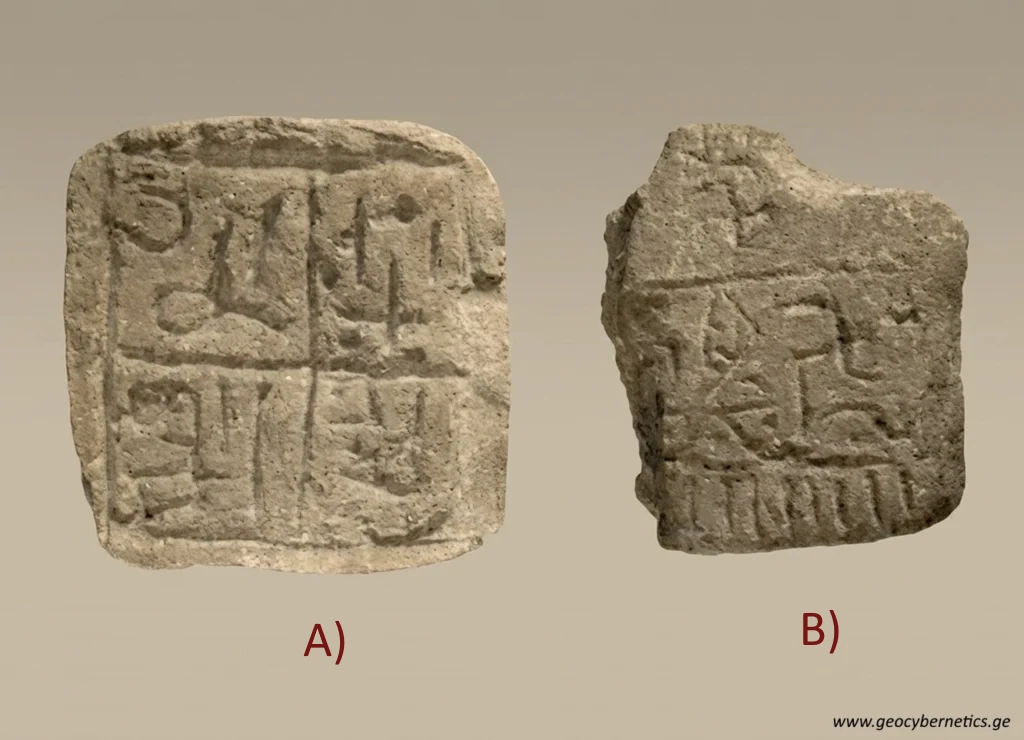
Figure 4. (a) Tskhinvali tablet, 9th–8th centuries BCE; (b) Khovle tablet, 14th century BCE.
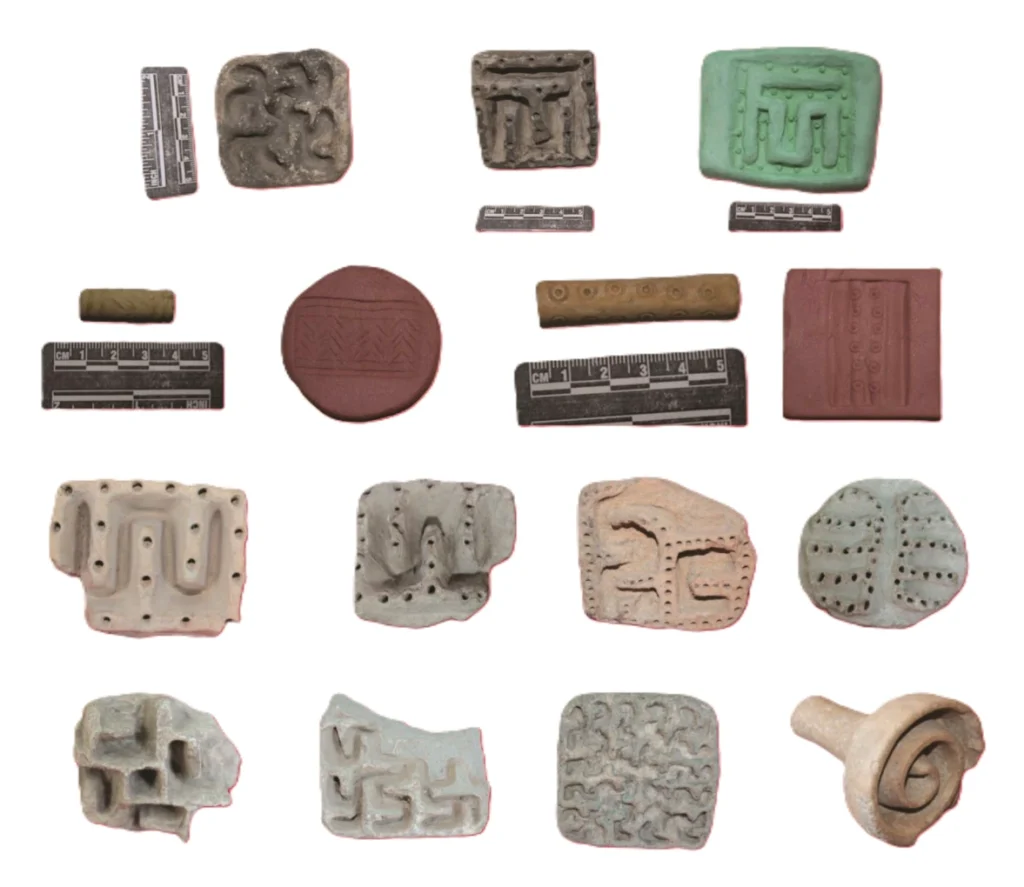
- The Didnauri seals (12th–13th centuries BCE). These seals, discovered in a burial dating to the 12th–13th centuries BCE, bear signs that display parallels with the Linear A and Linear B writing systems of the Aegean world (Figure 5). Particularly intriguing is one sign that corresponds to the ideogram for “wine” in these systems. According to the researchers, this sign, together with other small bone seals discovered at the same site and bearing symbols associated with harvests and quantities, may point to a complex administrative system. One interpretation suggests that the objects may have belonged to a tax collector [26].
- Epigraphic finds. Of particular interest are a jug bearing four unidentified signs, discovered in the village of Dablagomi and dated to the 4th–3rd centuries BCE, and a stone bearing an undeciphered linear inscription, found in the village of Jumiti (Chkhorotsku). According to the scholar G. Kvashilava, the Dablagomi inscription may be decipherable, opening up new avenues for research [25, 41].
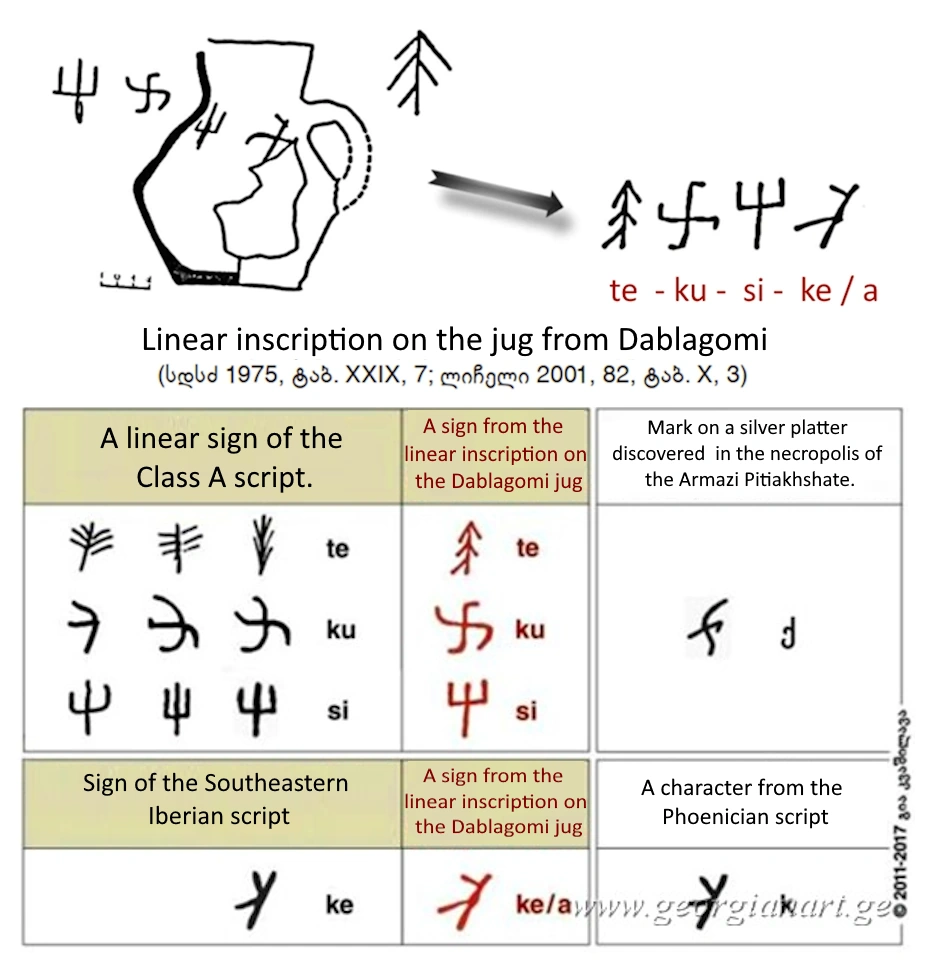
- The linear inscription on the Jumiti stone. In 1986, a stone bearing an undeciphered linear inscription was discovered in the Lezha area of Jumiti village, in the Chkhorotsku district (Figure 7). The artifact consists of a hard, low-porosity rock and measures approximately 40 cm in length and 10–15 cm in height.

1.5.2. Colchian Amphorae and Sign Systems
Beyond the arguments based on ancient written sources, the widespread distribution of stamped pottery — including brown-clay vessels — may be regarded as another substantial material indicator of the existence of sign systems in the Colchian sphere. Production of these vessels began in the 4th century BCE [14]. Archaeological excavations, particularly along the Black Sea coast, have yielded numerous fragments of Colchian amphorae and pithoi bearing incised cross-shaped stamps.
Research by Georgian archaeologists Gela Gamkrelidze and Vakhtang Licheli indicates that these artifacts were not merely household objects, but formed part of an established trade and economic system. The marks resemble those found on Colchian pithoi, further supporting the possibility of their local origin [14].
Archaeological evidence suggests that Colchian amphorae were manufactured at several pottery-production centers. Kilns used for firing ceramics have been discovered near Sukhumi, at the settlement of “Tsiteli Shukhura,” in Gulripshi, and at other locations; amphora fragments have also been found at these sites. Stylistic and technological analyses of the surviving examples confirm that amphora production in Colchis continued actively during the Hellenistic period [14].
1.5.2.1. The Significance of Cross-Shaped Stamps and Their Context in the History of Writing
Special marks and stamps frequently appear on Colchian amphorae dating to the 3rd–2nd centuries BCE. They are thought to have served purposes such as regulating production, controlling commercial quality, and maintaining administrative records.
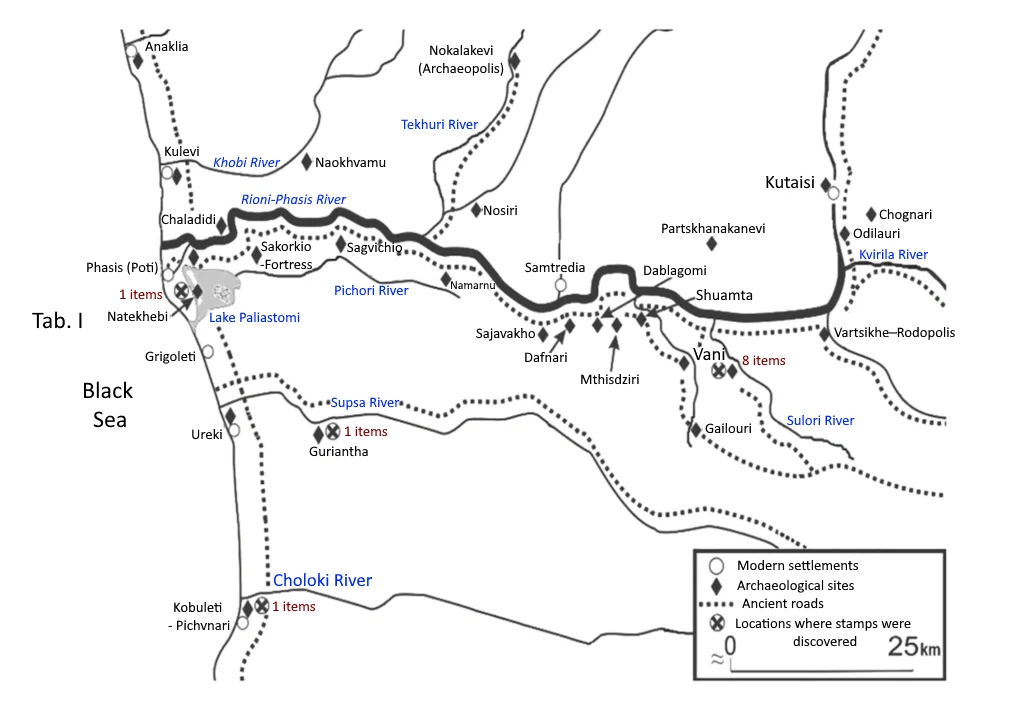

The cross-shaped stamps and other geometric marks on amphorae, often applied before firing, presumably carried administrative or cultic significance. According to observations by V. Licheli and G. Gamkrelidze, more than 20 distinct signs resembling graphemes have been identified, dating from the 4th to the 2nd centuries BCE. Their distribution and structural regularity argue against their being entirely random. Some display structural similarities to Linear A, further supporting the hypothesis that a local writing system may have existed in Colchis. In addition, elements identified on certain amphorae have been interpreted as features of the Asomtavruli script — specifically the signs “Jan” and “Khan” — which, according to the cited research, increase the likelihood of an indigenous and locally developed writing system [14, 25].
Comparative Analysis
Georgian scholars, including G. Kvashilava, have compared signs discovered in Georgia — sometimes referred to as Colchian linear signs — with ancient writing systems of the Mediterranean basin, including Linear A, Linear B, and the Cypro-Minoan syllabic systems. Graphic similarities and possible phonetic correspondences suggest that ancient Colchis was not isolated, but participated in the cultural exchanges of the wider world of contemporary civilizations.
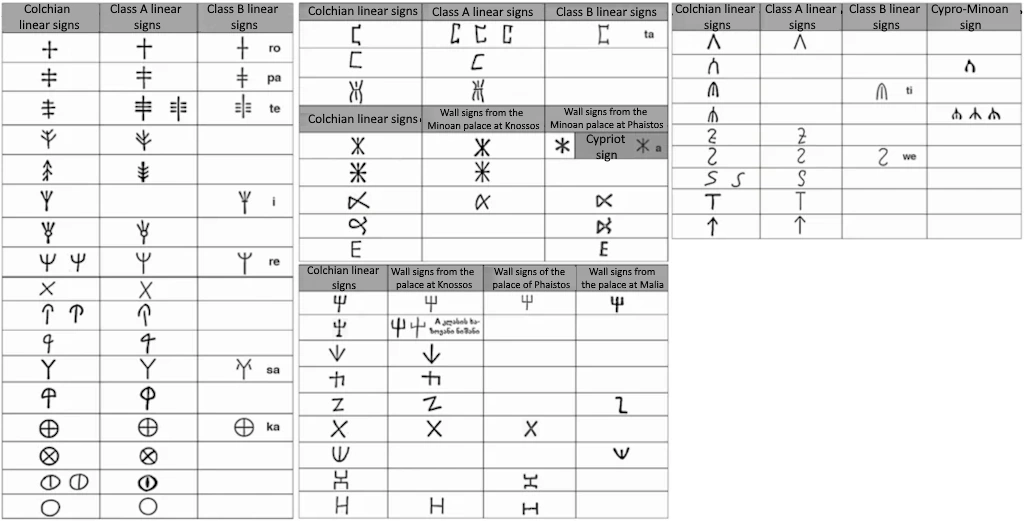
Table 1. G. Kvashilava’s comparative table: graphic correspondences between Colchian signs and the syllabograms of early Aegean scripts (Linear A, Linear B, Cypriot syllabary).
Taken together, the archaeological and visual materials presented here do not provide an unequivocal basis for asserting that a fully developed alphabetic writing system existed in Colchis. They do, however, clearly indicate the presence of a cultural environment in which symbolic signs were used to record and transmit information.
The stability, recurrence, and functional contexts of these signs allow them to be considered possible manifestations of proto-writing or an earlier stage of writing culture, dating at least as far back as the second millennium BCE.
1.6. The Grakliani Hill Phenomenon: A New Chapter in the History of Writing
1.6.1. Historical Context and Significance
The archaeological site of Grakliani Hill represents one of the most significant historical discoveries in Georgia, playing an important role in understanding the cultural, religious, and social processes of the Early Antiquity [45]. In this context, the Grakliani inscription deserves particular attention, as it is associated not only with an early Georgian writing system but also contributes to determining the chronology of the spread of writing in the region.
The purpose of examining the Grakliani inscription in this subsection is not to identify it with any known linguistic or alphabetic system. Rather, our aim is to consider its structural, spatial, and semiotic characteristics within the cultural context in which it emerged.
1.6.2. Topography and Archaeological Context
The archaeological site of Grakliani Hill is located in Kaspi Municipality, near the villages of Samtavisi and Igoeti, at the confluence of the Lekhura and Tortla rivers, on the right bank of the Lekhura. The site extends across elevations of 680–723 meters above sea level [46, 47].
Excavations conducted since 2007 under the direction of Professor Vakhtang Licheli have demonstrated that evidence of human habitation at Grakliani extends continuously from the Paleolithic to the Late Bronze Age [46, 48]. Eleven distinct chronological layers have been identified, with particular interest focusing on the layers dating to the 8th–6th centuries BCE and the earlier Late Bronze Age–Early Iron Age period.


1.6.3. Cult Buildings and Their Role
The Grakliani archaeological complex includes a system of cult buildings that indicates its religious and ceremonial significance. Ceramic materials, ritual artifacts, and architectural structures discovered in different layers suggest that Grakliani Hill may have served as an important administrative, religious, and commercial center [46, 50, 51].
1.6.4. Commercial and Administrative Functions
The diversity of the artifacts discovered at the site indicates that it was one of the region’s most important cultural, religious, and commercial centers [45, 52]. Both imported and locally produced artifacts of particular significance have been found, including:
- A gold disc, dating to the 4th millennium BCE, with a known parallel only in the city of Uruk in southern Mesopotamia [52].
- A bread-baking oven, decorated with ornamental elements and varying in dimensions according to the size of the building.
- Numerous residential and storage structures, temples, and more than 300 burials.

1.6.5. Socioeconomic Development: Commercial and Administrative Systems
Grakliani Hill was not merely a cult center. Excavation results indicate that a substantial administrative and commercial system operated at the site. The seals discovered at Grakliani Hill reveal significant connections with the cultures of Mesopotamia and Asia Minor [52].
This is supported by the following evidence:
- Seals: Cylindrical, conical, and prismatic seals have been discovered. Some were imported, reflecting southern Mesopotamian and Asia Minor/Achaemenid influences, while others were locally produced. The seals depict astral symbols and religious scenes. The presence of locally manufactured seals is presented as direct evidence that the region possessed an independent administrative apparatus [52].
- A standardized system of weights: Weights dating to the end of the 2nd millennium BCE have been discovered, indicating an established commercial standard of 366 grams. This points to intensive trade relations with both domestic and external markets [46].

1.6.6. The Cult Complex and the Discovery of the Inscriptions
In 2015, archaeologists discovered a cult building—a temple—on the third terrace of Grakliani Hill. The structure measures 25 meters in width and 6 meters in length. Inside the temple, unique single-line inscriptions were discovered on two separate altars. They are provisionally designated “A” and “B” [46, 49, 53].
1.6.7. The Grakliani Hill “A” Inscription (Western Altar)
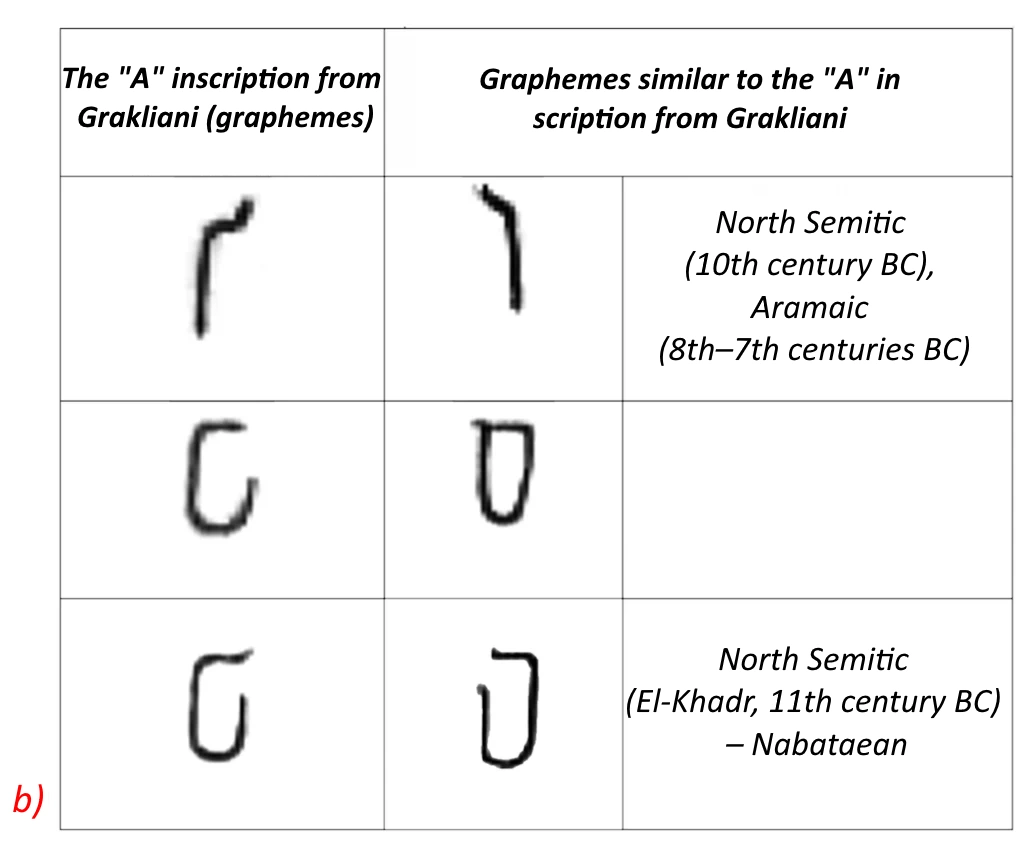
A relief inscription consisting of three graphemes is located on the altar beside the temple’s western wall. Graphic analysis indicates similarities with North Semitic writing systems dating to the 11th century BCE [53].
The archaeological context is noteworthy: a clay figurine imitating a woman’s breasts and an exposed abdomen was found on the altar bearing the inscription. Ritual offerings were presumably placed here, giving the inscription a sacred significance.

1.6.8. The Grakliani Hill “B” Inscription (Central Altar)
A second, more extensive inscription is located on the pedestal of the temple’s central altar, which faces south.
- Technical characteristics: The pedestal measures 0.8 meters in length, and the inscription contains 10 graphemes. Traceological analysis has established an interesting technological detail: the clay block bearing the text was manufactured and fired separately, then attached to the pedestal. This rules out a merely decorative purpose and supports the interpretation that the inscription was deliberately created as an informational or cultic text [53].


Figure 12. The Grakliani Hill “B” inscription and its ritual context. (a) General view of the altar of the fertility goddess, together with the associated ceramic finds [50]; (b) and (c) detailed views of the “B” inscription carved into the altar pedestal, photographed from different angles [50, 51].
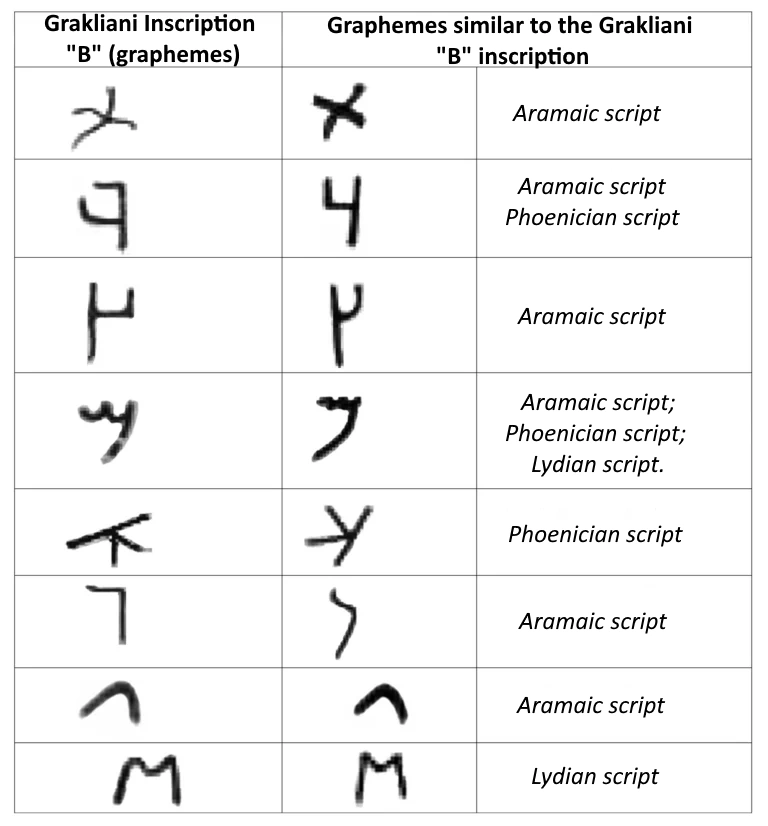
Graphic analysis: The inscription is monumental in character, and its graphemes are of uniform height. Of the 10 signs, one is severely damaged and five are partially damaged. The graphemes differ from one another. According to the researchers’ observations, six of the ten signs have parallels in Aramaic writing, while one is entirely unique and does not correspond to any known system. This has been interpreted as an indication that a local variant of writing may have existed [53].
1.6.9. The Impact of Grakliani Hill on the Chronology of Writing Worldwide
The dating of the Grakliani Hill inscription has had a fundamental impact on the established global paradigm of the history of writing. Radiocarbon (¹⁴C) analyses conducted by Beta Analytic in Miami, USA, as well as laboratories in Groningen and Zurich, confirmed a date in the second half of the 11th century BCE (1005–950 BCE) [46].
This date is considered critically important because it challenges the established chronology of writing:
- The Grakliani inscription is at least two centuries older than the examples of the classical Aramaic alphabet previously regarded as the earliest.
- It is contemporary with, or may even predate, Phoenician writing, commonly dated to approximately 1050 BCE and regarded as the world’s earliest alphabetic writing system. Accordingly, it would also predate other alphabets derived from Phoenician, including Hebrew (10th century BCE), Greek (9th century BCE), and Latin (7th century BCE). The article argues that this indicates that an alphabetic system developed in the Caucasus contemporaneously with the Phoenicians, or very close to their period.
- It fundamentally challenges the stereotype that writing became established in Georgia only at a later stage, during the Hellenistic or Christian periods, as a result of external influence.
1.6.10. The “Information Stele” and Its Ritual Setting
To the south of the pedestal bearing inscription “B,” an associated floor and a so-called “information stele” featuring a sculpted ram’s head were discovered. Together with inscription “B,” the stele forms part of a unified religious-symbolic composition.
A charred log measuring 12 cm in diameter was found at the southeastern corner of the pedestal [46]. Particular attention should be paid to the fact that the information stele itself was not fixed in a stable position. Based on the archaeological context, it has been suggested that the stele was movable and may have been replaced or repositioned during certain rituals, indicating a dynamic liturgical process.
A sample taken from the support column of the information stele was dated by a Miami laboratory to the 11th–10th centuries BCE [46].
The inscription on the column itself has not yet been deciphered. It was produced using a technique similar to that of inscription “B” and draws on a repertoire of signs that was in use during the 11th–9th centuries BCE. According to the researchers, the signs on the information stele cannot be explained as direct analogues of Kassite kudurru monuments or Colchian kyrbeis. This further emphasizes the inscription’s distinctive and potentially local character [46, 54, pp. 89–93].

The discoveries at Grakliani Hill—particularly the inscriptions attributed to the 11th–10th centuries BCE—are presented as evidence that a highly developed society existed in the territory of Georgia and possessed an important intellectual innovation: writing. According to this interpretation, the inscriptions do not represent a mechanically borrowed system or merely decorative sign practice, but rather a locally adapted system used for both cultic and administrative purposes. As Professor Vakhtang Licheli has noted, this discovery changes an important chapter not only in the history of Georgia but also in the history of writing worldwide.
The Grakliani inscription may thus be regarded as one significant manifestation of the multicentric process through which writing culture developed in the Caucasus. A fuller understanding of this process will require future interdisciplinary research involving archaeology, semiotics, paleography, and cultural anthropology.
Taken together, the available evidence presents the Grakliani inscription not as an accidental or decorative arrangement of signs, but as a deliberately structured information system operating within a ritual setting. Although its full meaning remains undeciphered, its structural character is, in the article’s interpretation, unmistakable.
1.7. The Bashplemi (Mtisdziri) Lake Tablet: A New Artifact on the Epigraphic Map of the Caucasus
Discovery Context and Location
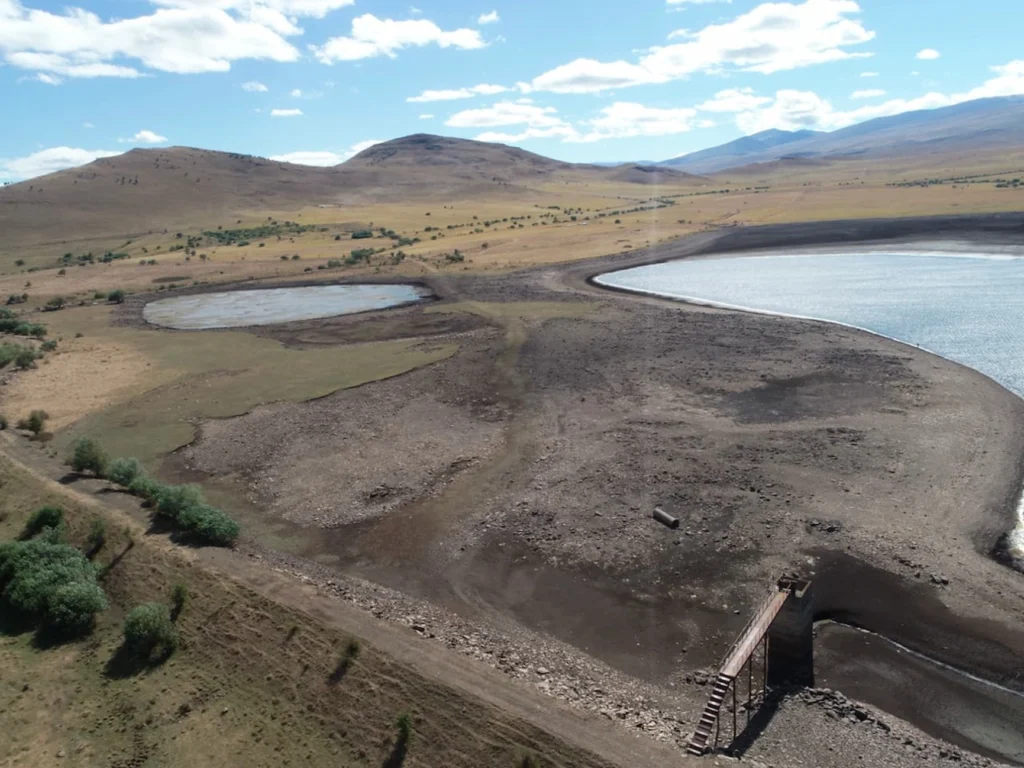
In late autumn 2021, a unique archaeological discovery was made in Dmanisi Municipality, specifically in the area of the Mtisdziri Reservoir, known as Lake Bashplemi. Following a sharp drop in the water level, local residents discovered a basalt stone slab on the lake’s muddy bottom, covered with signs belonging to an unknown writing system [31, 55, 56, 57].
The discovery site is located in an area of considerable historical and archaeological significance. The Dmanisi volcanic plateau and the Mashavera River basin are known for the remains of hominins (Homo georgicus) dating to about 1.8 million years ago. However, the Bashplemi tablet, like the ceramic fragments and obsidian pieces found near the reservoir, points to intensive cultural activity in the region during the Late Bronze Age and Early Antiquity [31].
1.7.1. Morphological and Technological Analysis of the Lake Bashplemi Artifact
The discovered artifact is a “book-sized” stone slab (Figure 16) with the following physical characteristics:
- Dimensions: 24.1 × 20.1 cm; thickness varies from 0.8 to 1.8 cm.
- Material: Vesicular (porous) basalt. Geological analysis indicates that the stone is of local volcanic origin, a finding consistent with the possibility that the artifact was manufactured in the area.
- Manufacturing technique: The symbols were executed with a high degree of craftsmanship. The technique appears to have involved advanced tools, possibly a conical drill and specialized cutting implements, as suggested by the precision and detail of the engravings.


1.7.2. Epigraphic Characteristics and Parallels
The tablet bears 60 symbols arranged in seven horizontal registers. Graphic analysis indicates that 39 of the 60 signs are unique (Figure 16).
The signs are organized into registers and, in some cases, display repetition and grouping. These characteristics are significant because they go beyond the framework of ornamentation or decoration and suggest an attempt to record information in a structured manner.
Although the writing remains undeciphered, the research team, including R. Shengelia and colleagues [31], draws attention to visual parallels with various epigraphic systems.
- Local parallels: The signs display similarities to the inscriptions from Grakliani Hill, the so-called “Colchian runes,” and graphic elements associated with Proto-Georgian letter forms, particularly those resembling the Mrglovani and Nuskhuri-Khutsuri scripts.
- International parallels: Morphological analysis has led researchers to note visual analogies with several writing traditions, including Albanian, Brahmi, Old Phoenician, and certain Semitic systems. These parallels, however, should be understood solely as general similarities in graphic form, not as evidence of genetic, historical, or linguistic connections.
Some signs may have served numerical or punctuation functions. At the level of hypothesis, possible uses of the tablet include recording religious offerings, organizing construction work, or serving military-administrative purposes [31].
Thus, the Lake Bashplemi tablet cannot be regarded as an example of a fully developed alphabetic writing system. It does, however, clearly demonstrate a deliberate, structured, and repetitive sign-based practice. Its significance lies not in identifying a specific language, but in illuminating a cultural and intellectual environment that may reflect a stage preceding the formation of writing systems
Concluding Synthesis: A New Paradigm in the History of the Caucasus
The archaeological material examined — Colchian glyptics, administrative marks on amphorae, the Grakliani inscription, and the Lake Bashplemi tablet — collectively presents a coherent picture of early symbolic and proto-writing practices in the Caucasus. Despite their different chronological and geographical contexts, these artifacts exhibit several shared characteristics: the stability and recurrence of signs, their spatial organization, and their functional significance.
With its clearly defined archaeological context and linear structure, the Grakliani inscription represents one of the more compelling examples of a sign system in eastern Georgia. The Lake Bashplemi tablet broadens this picture from a wider semiotic perspective, suggesting that similar experiments may have existed in different regions and taken different forms.
The evidence presented here does not directly establish the existence of a fully developed alphabetic writing system in the 2nd–1st millennia BCE. It does, however, point clearly to structured stages preceding the emergence of writing systems. Such stages are characteristic of complex societies in which the recording, transmission, and control of information served crucial functions. It is possible that this material represents the “missing link” hypothesized by Ivane Javakhishvili, pointing toward pre-Christian roots of Georgian writing.
This perspective allows the Caucasus to be considered not merely a periphery of writing culture, but a potential area in which local traditions, regional contacts, and cultural innovations interacted. Accordingly, the emergence of Georgian writing in Late Antiquity may be understood as the outcome of a long and multilayered process.
The present conclusion does not offer a definitive resolution of the question. Rather, it establishes a framework for further interdisciplinary research requiring the combined analysis of archaeology, epigraphy, semiotics, and cultural history.
References
1. Jeong C, Balanovsky O, Lukianova E, et al. ,The genetic history of admixture across inner Eurasia, Nature ecology & evolution, vol.3, pp. 966–976.
2. A. Zeilstra, J. Knop. Details of the History of Inner Eurasia Revealed by New Study. Max Planck Institute of Geoanthropology. [ინტერნეტი] 2019 წლის 29 April .
3. მაკალათია, სერგი. სამეგრელოს ისტორია და ეთნოგრაფია. თბილისი : საქართველოს მხარეთმცოდნეობის საზოგადება, 1941.
4. ჯაფარიძე, ო. საქართველოს ისტორიის სათავეებთან. თბილისი : თსუ, 2003. ISBN: 99940-13-33-5.
5. Sagona, A. The Archaeology of the Caucasus: From Earliest Settlements to the Iron Age. s.l. : Cambridge University Press, 2017. ISBN:9781139061254.
6. მიქელაძე, თეიმურაზ. ძიებანი კოლხეთისა და სამხრეთ-აღმოსავლეთის შავიზღვისპირეთის უძველესი მოსახლეობის ისტორიიდან. თბილისი : მეცნიერება, 1974.
7. ლორთქიფანიძე, ო. ძველი ქართული ცივილიზაციის სათავეებთან. ოქრომრავალი კოლხეთი. თბილისი : პალიტრა L, 2022.
8. ლიჩელი,ვ., კოლხეთი ძვ. წ. I ათასწლეულში – აღმოსავლური ტენდენციები. s.l. : ქართველოლოგია, 2012 წლის, ტ. 2.
9. მელიქიშვილი, გ. ძიებანი საქართველოს, კავკასიისა და ახლო აღმოსავლეთის ძველი ისტორიის დარგში. თბილისი : ჯალი, 1999. გვ. 47-52. 99928-41-00-1.
10. ლორთქიფანიძე, ო. კოლხეთის სამეფო.georgianencyclopedia.ge .
11. Morritt, Robert D. Stones that Speak. s.l. : Cambridge Scholars Publishing, 2010. 978-1443821629.
12. ლორთქიფანიძე, ო., ანტიკური სამყარო და ძველი კოლხეთი : სავაჭრო-ეკონომიური და კულტურული ურთიერთობის ისტორიისათვის ძვ.წ. VI-II სს. თბილისი : თბილისის უნივერსიტეტის გამომცემლობა, 1966.
13. ჯაფარიძე, ო. ქართველი ერის ეთნოგენეზისის სათავეებთან. თბილისი : არტანუჯი, 2006. ISBN: 99940-55-46-1.
14. გამყრელიძე, გ. კოლხოლოგიური ნარკვევები. s.l. : არქეოლოგიური კვლევის ცენტრი, 2010.
15. ხახუტაიშვილი ნ., პაპუაშვილი რ., ჩხატარაშვილი გ., კახიძე ე., †ინანიშვილი გ.,. კოლხეთი – რკინის მეტალურგიის უძველესი ცენტრი (ისტორიულ-ინტერდისციპლინური კვლევა). ბათუმი : ბსუ, 2024. ISBN 978-9941-488-87-0.
16. სულავა, ნ., არახამია, გ. მამარდაშვილი,გ. რეზესიძე, ნ. ძველი კოლხეთი-სპილენძის მეტალურგია (წყაროები, ლიტერატურული ცნობები, მითები). თბილისი : უსათ., 2025.
17.Erb-Satullo Nathaniel L., Gilmour Brian J.J., Khakhutaishvili N.,. Late Bronze and Early Iron Age copper smelting technologies in the South Caucasus: the view from ancient Colchis c. 1500–600 BC. s.l. : Journal of Archaeological Science, 2014, vol. 49.
18. EF, HARTUNG. History of the use of colchicum and related medicaments in gout; with suggestions for further research. 3, . : Annals of the Rheumatic Diseases, 1954 წლის, Annals of the Rheumatic Diseases, Vol. 13.
19. Tsoucalas G, Sgantzos M., Severus Iatrosophista, Theodosius the Philosopher and Jacobus Psychrestos, introducing Colchicum as an innovative treatment for podagra in the early Byzantine period. 2, s.l. : Mediterr J Rheumatol., 2017 , Vol. 28, pp. 106-109.
20. R., Shengelia., Colchis – Iberian Medicine or Cura Mediana. s.l. : Vesalius, 2016 , Vol. 22, pp. 7-13.
21. კვაშილავა, გ., პროტო-ქართველური წერილობითი ძეგლების – ხაზოვანი წარწერების ამოკითხვის შესახებ. s.l. : Ars Georgica, 2010 წლის, Ars Georgica.
22. არგონავტიკა – არგონავტების ლაშქრობის მითის ისტორია. საქართველოს პარლამენტის ეროვნული ბიბლიოთეკა.
23. როდოსელი, აპოლონიოს (ა.ურუშაძის თარგმანი). არგონავტიკა. თბილისი : სახელგამი, 1948. გვ. 196.
24. ურუშაძე,ა. , ძველი კოლხეთი არგონავტების თქმულებაში (1. გამოკვლევა 2. ბერძნული ტექსტები,ქართული თარბმანითა და შენიშვნებით ). თბილისი : თსუ, 1964.
25. Licheli, Vakhtang. Proto Georgian script – an archaeological reality (4th c BC – 4th c AD) .
26. Shengelia R, Gordeziani L, Tushabramishvili N, Poporadze N, Zourabichvili O, Discovery Of Unknown Script Characters In Georgia: The Bashplemi Lake Tablet. 03, Cluj-Napoca: Journal of Ancient History and Archaeology, 2024, Journal of Ancient History and Archaeology, Vol. 11.
27. კირბები. ბიბლიოვიკი. [ინტერნეტი]
28. ტყეშელაშვილი, მ., უცხოელ ავტორთა ცნობები საქართველოს, როგორც წიგნიერი ერის შესახებ. ქართული როგორც უცხო ენა.
29. თ.ყაუხჩიშვილი, ჰეროდოტე (თარგმანი. ისტორია ტ.I. თბილისი : თსუ, 1975.
30. (tr.G.C.Macaulay), Herodotus. The History of Herodotus. 1890.
31. შენგელია, რ., გორდეზიანი, ლ., თუშაბრამიშვილი, ნ., პოპორაძე, ნ., ზურაბიშვილი, ო. Discovery Of Unknown Script Characters In Georgia: The Bashplemi Lake Tablet. 2023, Journal of Ancient History and Archaeology.
32. Ivantchik, Askold. The Scythian ‘Rule Over Asia’: the Classical Tradition and the Historical Reality. Ancient Greeks, West and East. გვ. 497–520.
33. კახიძე, ა., ნ. სურმანიძე. ძველი კოლხური გორანამოსახლარი, ნამჭედური I (NAMCHEDURI I. ANCIENT COLCHIAN INHABITED HILL). ბათუმი : PICHVNARI, 2023 წლის, Vol. VIII, გვ. 87-116.
34. ჩავლეიშვილი, ი., სამხრეთ-დასავლეთ საქართველოს სამოსახლოები და მშენებლობის ტექნიკა II-I ათასწლეულში. ბათუმი : Pichvnari, 2023 წლის, Vol. VII, გვ. 142-173.
35. კახიძე,ა., სურმანიძე,ნ., ნაგერვაძე, მ., გორანამოსახლარი ნამჭედური II. ბათუმი : Pichvnari, 2023 წლის, Vol. VIII, გვ. 206-238.
36. Menotti, Francesco. Living on the Lake in Prehistoric Europe 150 Years of Lake-Dwelling Research. s.l. : Routledge, 2004. 9780415317207.
37. Barbara Fath, Renata Huber, Carmen Löw, Gishan Schaeren. UNESCO WORLD HERITAGE PREHISTORIC PILE DWELLINGS AROUND THE ALPS. s.l. : International Coordination Group UNESCO Palafittes, 2011.
38. დანელია,კ., სარჯველაძე, ზ., ქართული პალეოგრაფია. თბილისი : ნეკერი, 1997.
39. ჯავახიშვილი, ი., ქართული დამწერლობათა-მცოდნეობა ანუ პალეოგრაფია. თბილისი : თსუ, 1949.
40. ჭილაშვილი, ლ., [რედ.] პროფ. ე.სანთიბიძე. წინაქრისტიანული ხანის წარწერა ნეკრესიდან. 2000 წლის, ქართველოლოგი, Vol. 7.
41. კვაშილავა, გია., საქართველოში აღმოჩენილი დაბლაგომის დოქის წარწერისა და ჯუმითის ქვის უძველესი ხაზოვანი ნიშნის გაშიფრვის შესახებ. თბილისი : ილიას სახელმწიფო უნივერსიტეტი, 2017 წლის ივლისი-აგვისტო , ქართველოლოგია.
42. საქართველოს გლიპტიკური ძეგლები, იბერია-კოლხეთი გამოცემა, ; მთავარი რედ.: ,. ქ.ჯავახიშვილი. [რედ.] გელა გამყრელიძე. თბილისი : საქართველოს ეროვნული მუზეუმი, 2015 წლის, იბერია-კოლხეთი, საქართველოს კლასიკური და ადრემედიევური პერიოდის არქეოლოგიურ ისტორიული კვლევანი, გვ 5-36.
43. ბერძენიშვილი, დ., ანტიკური ხანის გლიპტიკური ძეგლები ქუთაისიდან და მისი მიდამოებიდან. ქუთაისი : ქუთაისის სამეცნიერო ბიბლიოთეკის წელიწდეული, 2012 წლის, გვ. 29-44.
44. კვაშილავა, გ., პროტო-ქართველური წერილობითი ძეგლების – ხაზოვანი წარწერების ამოკითხვის შესახებ (მოკლე მიმოხილვა, შედეგები). s.l. : Ars Georgica, 2022 წლის. 1512-4088.
45. Licheli, V. Intellectual Innovations in Georgia (11th-9th Centuries BC): Excavations at Grakliani Hill. . 2020 წლის, Ancient Civilizations from Scythia to Siberia, ხმა 26, გვ. 350-361.
46. ლიჩელი, ვ. 2017 წელს გრაკლიან გორაზე ჩატარებული გათხრების მოკლე ანგარიში. s.l. : 2017 წელს ჩატარებული არქეოლოგიური გათხრების ანგარიშების კრებული. გვ. 12-23. 978-9941-8-0187-7.
47. ლიჩელი, ვახტანგ, გრაკლიანი – სამარხებიდან დამწერლობამდე. თბილისი : VII საერთაშორისო ქართველოლოგიური სიმპოზიუმის მასალები, 2016.
48. ვ.ლიჩელი, ს.ბუგინიშვილი, გრაკლიანის გორის 2019 წლის გათხრების მოკლე ანგარიში. თბილისი : არქეოლოგია, 2022 წლის, vol. 6. 2587-5175.
49. V.Licheli. Paleo-Georgian (Kartli) script of 7th c BC.
50. 3000-year-old script discovered in Georgia to change world’s history of writing. Georgianjournal. [ინტერნეტი] 2016 წლის 26 Jul.
51. მაისურაძე, ე., გრაკლიანის გორაზე აღმოჩენილი წარწერა. 2019 წლის 06 12, ისტორია, არქეოლოგია, ეთნოლოგია, გვ. 16-43.
52. Licheli, V., გრაკლიანის გორის საბეჭდავები (Seals from Grakliani Hill, with English summary). s.l. : Articles of Batumi Archaeological Museum, 2019 წლის.
53. ლიჩელი, ვ., ქართველოლოგიის მნიშვნელოვანი სიახლენი: გრაკლიანი სამარხებიდან დამწერლობამდე. თბილისი : VII საერთაშორისო ქართველოლოგიური სიმპოზიუმის მასალები, VIIth International Symposium on Georgian/Kartvelian Studies, 2016. გვ. 35-45.
54. მელიქიშვილი, გ., (რედაქტორი). ძველი აღმოსავლეთის ხალხთა ისტორია. თბილისი : მეცნიერება, 1988.
55. Hunter, Wiliam. Archaeologists uncover a mysterious stone tablet in Georgia that contains an unknown language – and it’s like NOTHING seen before. Online. [ინტერნეტი] dailymail, 2024, 4 12.
56. Lost Undeciphered Ancient Language Discovered on Tablet in Georgia. Newsweek. [ინტერნეტი] 2024. 06 12.
57. Silver, Eliana. Archaeology breakthrough as scientists discover stone tablet in Georgia with ‘ancient lost language’ NEVER seen before.Gbnews. [ინტერნეტი] 2024. 04 12.
📚 Additional video material related to the topic on the internet
- 🎥 ვიდეო (ENG): Ancient Georgian Kingdom of Colchis
YouTube – გაეცანით კოლხეთს - 🎥 ვიდეო (ENG): Artifacts from the Kingdom of Colchis (1300-164 BC) – Vani
YouTube – ვანის არტეფაქტები - 🎥 ვიდეო (ENG): The Forgotten Ancient Kingdom of Colchis
YouTube – ისტორიული მიმოხილვა - 🎥 ვიდეო: რა ვიცით გრაკლიანის აღმოჩენაზე?
YouTube – Rakurs Studio - 🎥 ვიდეო (ENG): GRAKLIANI MYSTERY — Archaeological Discovery
YouTube – ATINATI - 🎥 ვიდეო: გრაკლიანის გორა. უძველესი ქართული წარწერა?
YouTube – Toma Chagelishvili - 🎥 ვიდეო: გრაკლიანის აღმოჩენები | ეპიზოდი 22
YouTube – სასწაულის ძიებაში - 🎥 ვიდეო ლექცია: პროტოქართველური A კლასის ხაზოვანი და მიკენური ბერძნული B კლასის ხაზოვანი წარწერები
YouTube – გია კვაშილავა - 🎥 ვიდეო (ENG): Could the Bashplemi Tablet Rewrite Georgia’s Writing History?
YouTube – Mystery of History - 🎥 ვიდეო: ბაშფლემის ფირფიტა – დაკარგული ქართული დამწერლობა?
Facebook – ვიდეო მასალა